Why an Acme Tap Is Essential for Accurate Internal Thread Production
Accurate internal threading is an important requirement in modern manufacturing, where components must fit together securely and perform reliably under different operating conditions. From machinery and automotive equipment to industrial assemblies, threaded holes help create strong and dependable connections. Achieving consistent thread quality requires suitable cutting tools, correct machining practices, and careful inspection. Selecting the right Acme Tap helps manufacturers produce precise internal threads with the required profile, dimensional consistency, and functional performance.
Acme threads are widely used in applications that require efficient power transmission and controlled linear movement. Their trapezoidal thread profile provides a practical combination of strength, durability, and load-handling capability. These characteristics make them suitable for lead screws, positioning equipment, machine tools, and mechanical lifting systems. Understanding the importance of proper tapping tools allows manufacturers to improve production quality while reducing machining difficulties.
Understanding Acme Thread Geometry
Acme threads feature a trapezoidal profile designed to support mechanical movement and transmit force between connected components. Unlike conventional fastening threads, which primarily secure two parts together, Acme threads are frequently used in mechanisms that convert rotational movement into linear motion.
Their geometry provides substantial contact between mating thread surfaces, supporting stable operation under demanding mechanical conditions. The flat crest and root also contribute to practical manufacturing and inspection requirements. Depending on the application, manufacturers select different thread dimensions, pitches, and tolerances to achieve the required performance.
Producing these threads accurately requires a cutting tool that matches the specified thread form. An appropriately selected Acme Thread Tap helps create internal profiles that correspond with the intended external thread, supporting proper engagement and dependable movement.

Importance of Accurate Internal Thread Production
Internal thread accuracy directly affects the performance of mechanical assemblies. Incorrect thread dimensions can create excessive clearance, difficult assembly, uneven loading, or unwanted movement. In power transmission systems, these problems may reduce positioning accuracy and affect operational stability.
Manufacturers therefore need to maintain consistent thread dimensions throughout production. Correct tool selection, machine alignment, cutting speed, lubrication, and material preparation all influence the final result. A suitable tapping tool supports the required thread geometry and helps minimize dimensional variations.
Accurate internal threading is especially important when components operate under repeated movement or considerable mechanical loads. Consistency between mating parts helps improve equipment reliability and reduces the likelihood of premature wear.
How the Right Tapping Tool Improves Machining
A properly designed Acme Tap supports the formation of internal threads with a consistent profile. Its cutting edges remove material in a controlled manner, helping produce the required thread shape when used with appropriate machining conditions.
Tool geometry plays an important role in cutting performance. Flute design influences chip formation and evacuation, while cutting-edge condition affects surface finish and dimensional consistency. Choosing a tool suitable for the workpiece material can also reduce cutting resistance and improve machining stability.
Manufacturers should consider the material hardness, thread size, pitch, hole depth, and production volume before selecting a tapping tool. These factors help determine the appropriate tool configuration and machining method.
Matching the Tool to the Production Method
The machining method should suit the component and equipment. Hand tapping may work for occasional maintenance, while machine tapping offers better control in production. A rigid setup maintains alignment and reduces cross threading. For deeper holes, chip evacuation matters because trapped material can damage cutting edges or mark the finished surface.
Some applications require roughing and finishing operations, while others use one suitable tool. The choice depends on tap design, thread size, material, and tolerance. Operators should not assume every tool can be reversed or used in blind holes; follow the manufacturer's instructions.
Building a Consistent Process
Documenting machining parameters makes results repeatable. Teams can record drill diameter, tool identification, cutting fluid, speed, feed, and inspection results. These records help identify why tools wear early or batches produce inconsistent fits. Training operators to recognize unusual noise, rising torque, or poor chip formation can prevent damage.
A maintenance routine should include checking cutting edges, cleaning holders, and confirming alignment. Combining these controls with suitable gauging creates a dependable process rather than relying on the cutting tool alone.
Inspection and Quality Control
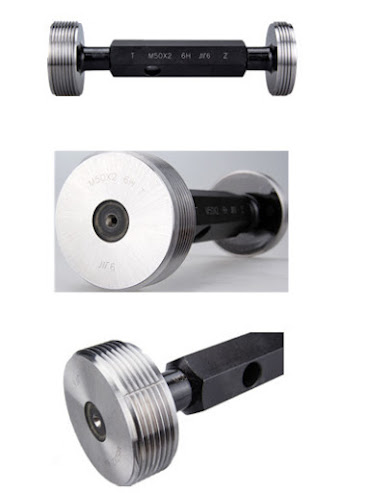
Inspect the finished dimensions, thread form, fit, and surface. Suitable thread gauges help determine whether the thread meets acceptance limits under the applicable standard.
When parts show tight fits, rough surfaces, or inconsistent engagement, review drill size, tool condition, alignment, lubrication, and settings. Timely tool replacement limits batch defects.
Industrial Applications and Production Benefits
Acme threads are used in lead screw assemblies, machine tool mechanisms, lifting equipment, vises, linear actuators, and other systems that need controlled movement. Accurate threads support smooth travel and predictable positioning, while reducing rework and improving assembly consistency.
Gaugestools supplies threading and inspection solutions for industrial requirements, helping customers identify products that correspond with their specifications.
Why Supplier Selection Matters
A dependable supplier provides clear specifications, consistent quality, and selection support. Buyers should confirm sizes, materials, thread forms, and inspection documentation. Gaugestools supports customers seeking Acme tooling and related precision products for manufacturing applications.
Choosing a suitable Acme Thread Tap connects engineering design with the finished component. Coordinated selection, preparation, machining, and inspection support repeatable results.
Conclusion
Accurate internal threading supports mechanical reliability. Correct preparation, cutting conditions, and inspection help manufacturers produce consistent threads. Gaugestools offers product options for businesses seeking reliable threading solutions and support for precision manufacturing.
Frequently Asked Questions
1. What is an Acme tap used for?
It creates internal Acme-form threads, commonly used in nuts and components that transmit motion or support mechanical loads.
2. Why is thread accuracy important?
Accurate threads help mating components engage correctly, move smoothly, distribute loads appropriately, and maintain reliable performance.
3. How should the correct tap be selected?
Confirm the thread standard, nominal diameter, pitch, tolerance class, workpiece material, hole depth, and production method before selection.
4. Is lubrication necessary during tapping?
Suitable cutting fluid can reduce friction and heat, assist chip evacuation, and improve cutting performance. The correct product depends on the material and process.
5. How can finished internal threads be checked?
Use suitable thread gauges and inspection methods specified by the applicable engineering standard and quality plan.

Comments
Post a Comment